
Goal Post
Remember why we do this
Happy new year. Ish. I mean, every “happy new year” comes with a caveat these days about, y’know, every damned thing. But I do hope your holidays were pleasant, restful, maybe even a bit festive.
Before getting into today’s newsletter, please mark your calendars for Saturday, Jan 24, 11am PT. That’ll be our first live Zoom Q&A of the year. Guests will be Carey and Chad Hayes, the writers behind The Conjuring and The Conjuring 2, as well as a bunch of other projects. The brothers have been at it since the late 80s and have so many interesting insights to share.
The live Zoom Q&As are open only to paid subscribers to attend or listen to later, so upgrade your subscription now!
It was raining in LA over the holidays, and that was the best possible thing that could happen. I never need an excuse to stay inside and watch movies and drink whiskey, but boy did the weather deliver one.

I watched 275 movies last year which, c’mon, is too many. Don’t do that.
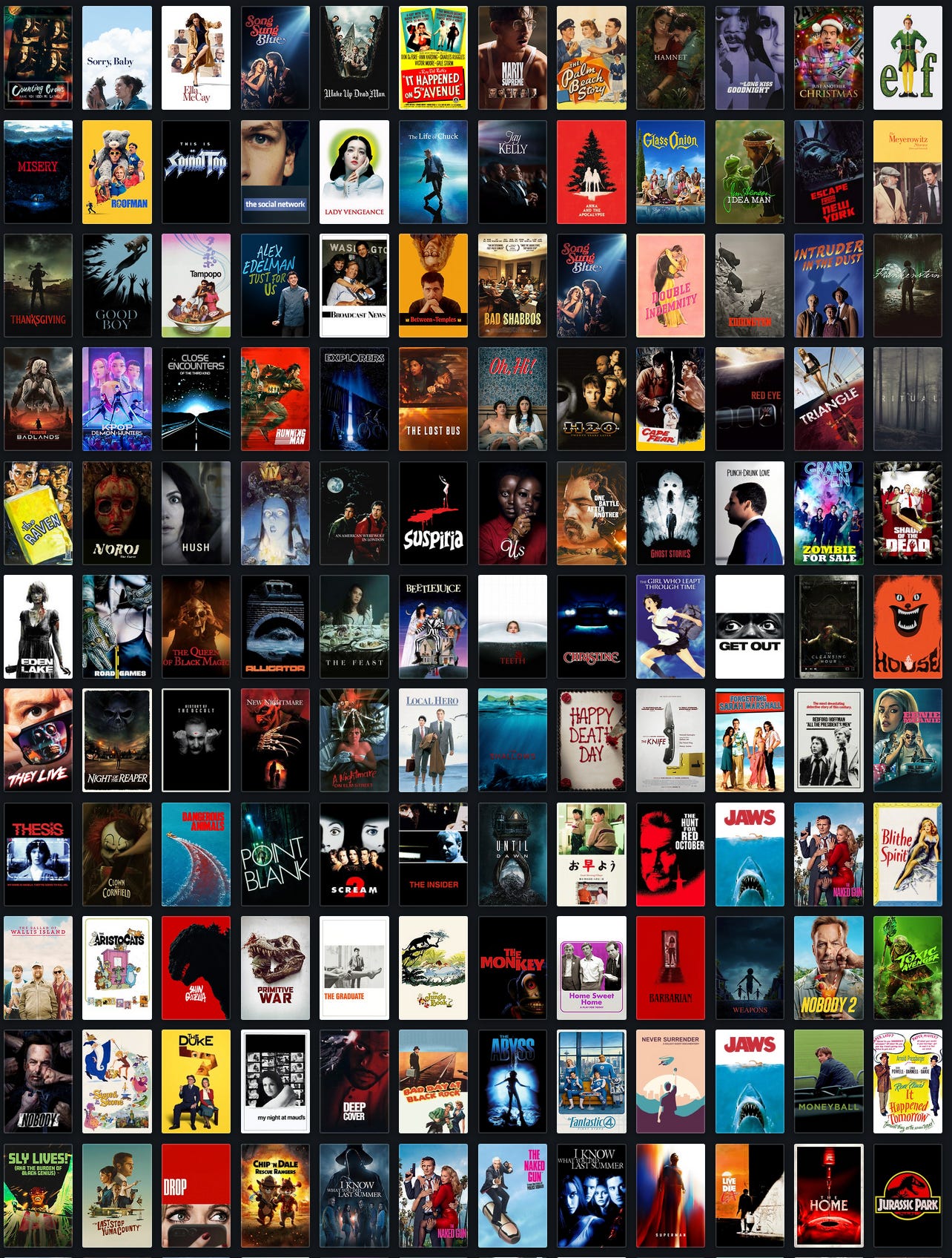
Though I have a bunch more to watch, my favorite three films of 2025 were Sinners, One Battle After Another, and Song Sung Blue. Three very different films. You’d never find them beside one another at the video store, if we still had video stores. Wildly different genres, different approaches to filmmaking. But these movies do have something in common, and it’s an important tenet of screenwriting that’s been top of mind for me for some time.
Goal Tending

In all three of these movies, the protagonist has a very clear goal. As I’ve mentioned in the past (in discussions of Cheers and Barbie), what a screen story basically boils down to is: a character in pursuit of a goal, circumventing or overcoming obstacles in order to achieve that goal.
That’s it.
I did a deep dive about character work in 2016 with David Goyer (Christopher Nolans’ Batman trilogy; Blade; co-creator, Foundation), and he said, “ask a writer, what does that character want? If you can’t sum it up in one line then your script is on shaky ground.”

A clearly defined goal for your main character provides a solid foundation for your story.
As Malcolm Spellman (co-creator, Bel Air; creator, The Falcon and the Winter Soldier) said when we talked: “90% of your issues are going to be lack of clarity on what the character wants. You’re going to think you know it. You’re going to be able to tell people you know it. And then when someone hands your script back to you and says, What does your character want in the scene? What does your character want in this episode? What does your character want in this movie? You’re going to crumble. That’s natural. …But you need to know.”
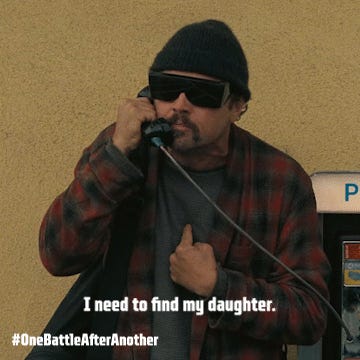
In One Battle After Another, once the plot kicks in, Bob’s entire reason for being is to recover his daughter from whoever took her. Everything else that happens falls out of that singular, driving goal. I love those kinds of movies wherein the goal necessitates the kind of action on the part of the protagonist that, by their nature, will cause complications. See also: Jaws (kill the shark!), The Fugitive (clear my name!), North by Northwest (clear my name too!), you get the idea.
I was predisposed to like Song Sung Blue. Against our better judgment, my wife and I got super into Neil Diamond after loving the needle drops in Mike Flanagan’s Midnight Mass a few years ago. And I always love a movie about our relationship to music, as someone for whom music is important to my life but who does not play an instrument. (See also: High Fidelity, Almost Famous).
But I didn’t expect to love Song Sung Blue as much as I did, nor for it to effect me so emotionally. That’s in part down to writer/director Craig Brewer’s facility for solid, emotional filmmaking and his great work with actors. But I think it’s also down to the thematic line that runs through all of his movies, which he mentioned in our conversation last month when I asked about a common thread in all of his work, from Hustle and Flow, through Dolemite Is My Name and Song Sung Blue:
Dreamers.
I think that we all have an interesting relationship when we experience a dreamer, especially someone who has a big dream, something that they really want to do.
I had a good friend that I went to high school with, and I remember having one of those late night drinks with him. And I said, well, what do you want to do, man? He goes, “I want to open an aquarium.”
And I remember just immediately thinking that’s just really fucking stupid. There’s just no way. You can’t just open an aquarium.

Brewer’s Song Sung Blue script is available as part of Deadline’s “Read the Screenplay” series here. Because the movie is such a “studio movie” (not derogatory! All of my favorite movies, from ET to When Harry Met Sally… to The Apartment are studio movies), I had a hunch that there’d be a line in the script in which the lead character, Mike Sardina (Hugh Jackman) clearly stated his goal in a scene. And guess what happens on page 16, during Mike’s first date with Claire (Kate Hudson):
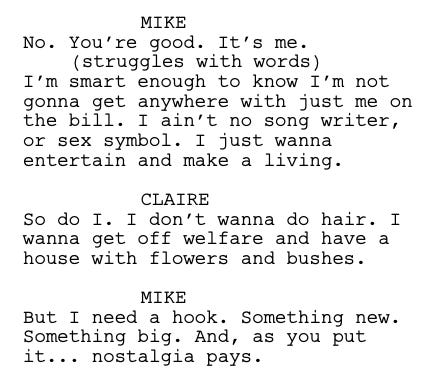
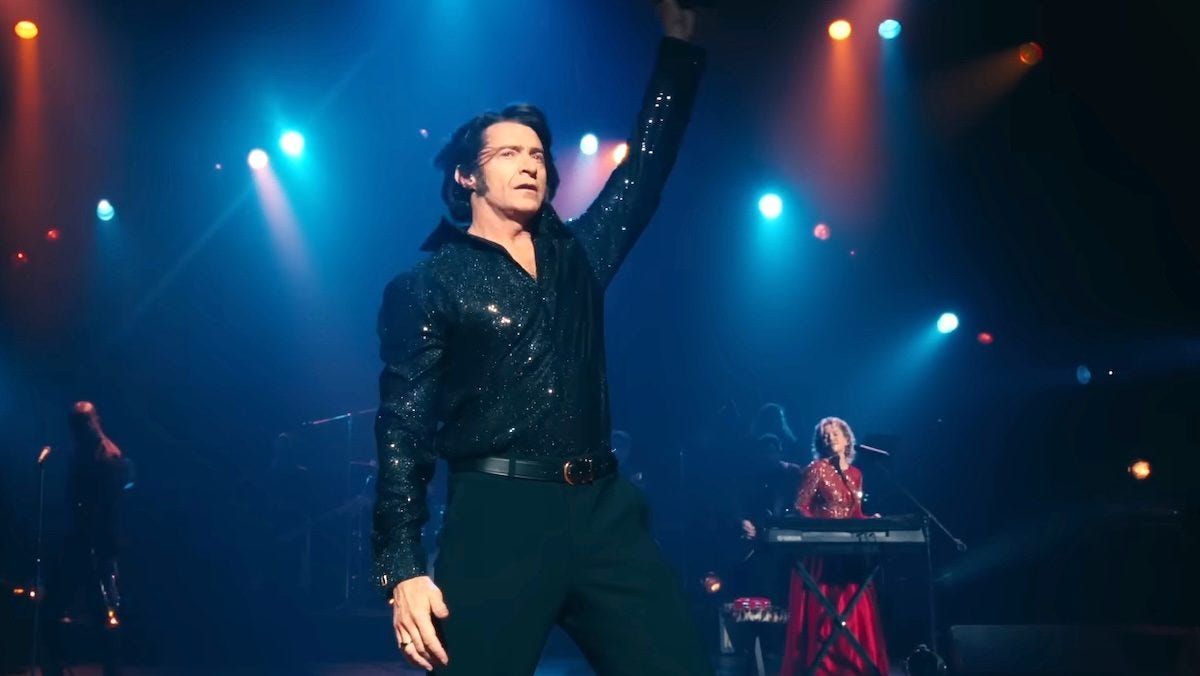
But even before that, there’s a (very) slightly more elliptical line in which Mike states his goal in life (which is also his goal in the movie). Straight into camera, he talks about his “alter ego,” his other “persona. Like a superhero of Rock n Roll.” He calls himself “Lightning”:
Lightning is a star. He’s a rockin’ God. Chuck Berry, Barry Manilow, and the Beatles all rolled into one. Singing the songs people want to hear. The songs people need. The songs that I need…
Being Lightning is the (somewhat) unacknowledged or subconscious goal that Mike has. And it’s becoming Lightning, a person who makes a living by entertaining, that drives the story.
I wondered if Sinners had a similarly plainly stated goal for its protagonists, twin brothers Smoke and Stack (Michael B. Jordan). The screenplay by writer/director Ryan Coogler is on the WB Awards site here.
While the work toward the brothers’ goal—to establish their juke joint—drives the plot for the first hour of the film, the reason behind that plot-goal is never only ever implied. But the main idea—Black folks having a place that is theirs—informs every action, every exchange.
As early as page 14, Sammie (Miles Caton), Smoke and Stack’s younger cousin tells his preacher father who has asked for his help giving the sermon the next day, “I been working all week pop. I just want to be free of all this for a day.” The constant crush of everyday life pushes on these characters.
Talking about the brothers’ time in Chicago, Sammie says, “I heard it ain’t got Jim Crow up there. A Black man can go where he wants.” Stack dismisses the idea, but that’s exactly what he and Smoke are building in their hometown of Clarksdale, Mississippi. A place where a Black man (and woman) can go where they want.
But…
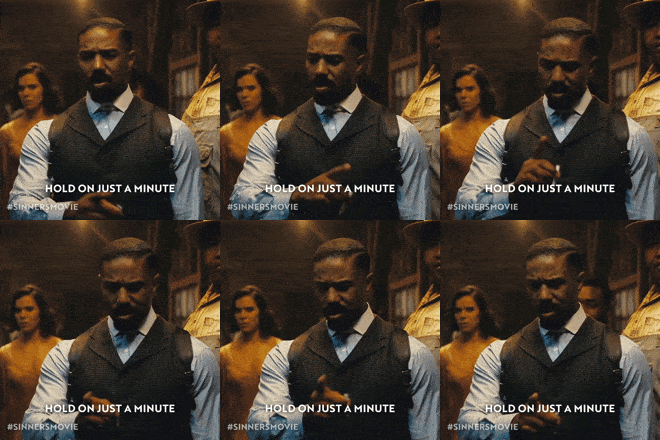
What Coogler does in Sinners regarding Smoke and Stack’s goal is one of the smarter executions of this maneuver I’ve seen.
Warning: Huge spoilers to come for all of the movies I’ve discussed.
So, I figure there are a few satisfying ways to end your movie, given that your protagonist has a clearly defined goal that they’ve been chasing since act 1.
The first is, after all of the trying and failing in act 2, to allow them to achieve their goal in the movie’s climax. Sheriff Brody kills the shark. Richard Kimble and Roger Thornhill clear their respective names. And Bob finds his daughter.
The end of One Battle After Another genuinely moved me. After the ride of the preceding two-and-a-half hours, Bob and Willa’s reunion was completely earned.
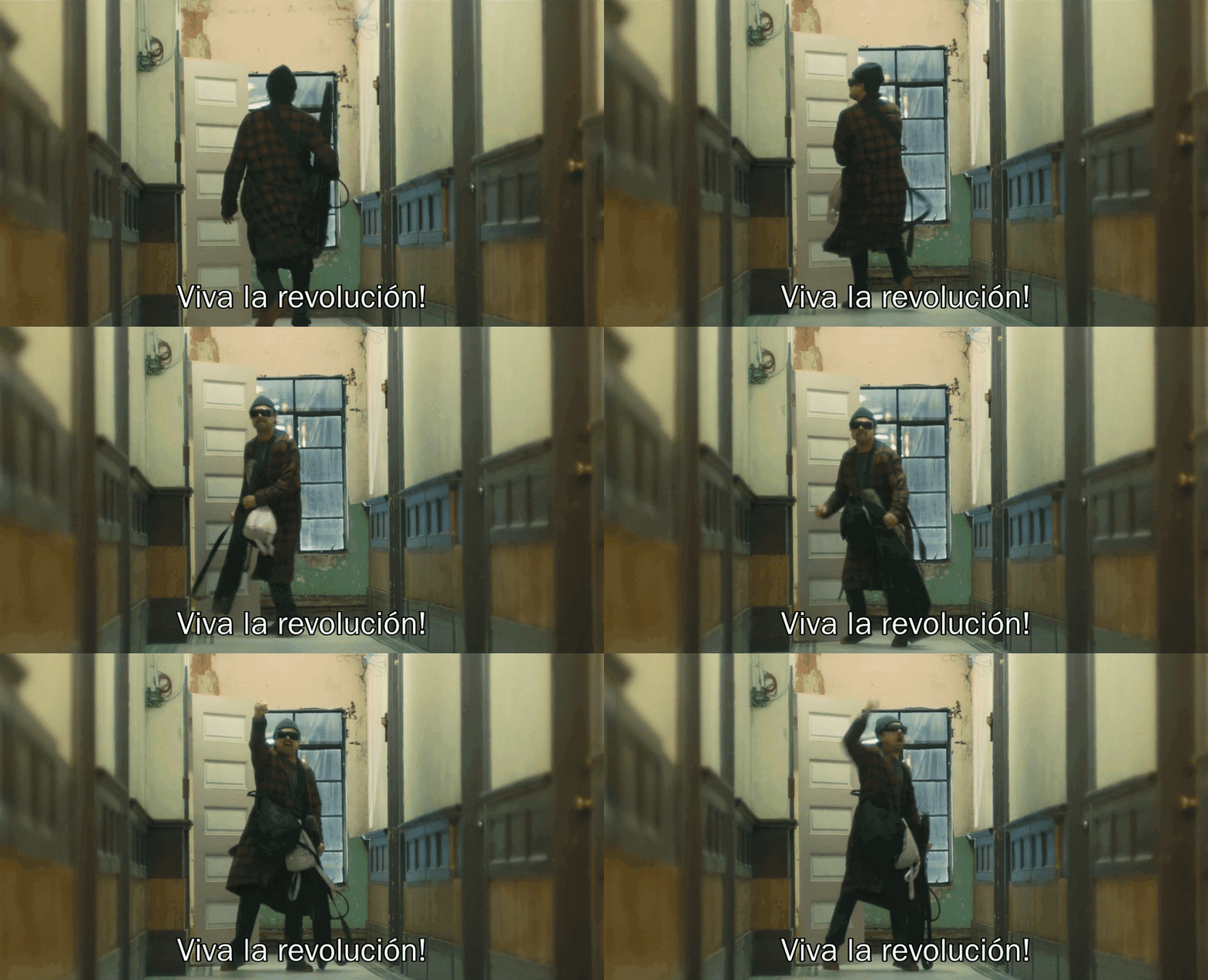
Another way to end your story is for your character to achieve their goal but with an asterisk. In one small, personal battle after another, Mike and Claire Sardina achieve their goal of playing music for a living, their work bringing them joy and a measure of both celebrity and stability.
Song Sung Blue climaxes with an exciting, emotional show put on by “Lightning” and his lady “Thunder.” They are even going to meet Neil Diamond himself! And then… a twist that is startling, heartrending, and completely unexpected because of the way it was set up throughout happens. Mike dies. But, even though he didn’t get to meet Neil Diamond, you know that he dies happy. Because he and Claire have accomplished what they set out to do. He died as Lightning, the way he always wanted to live.
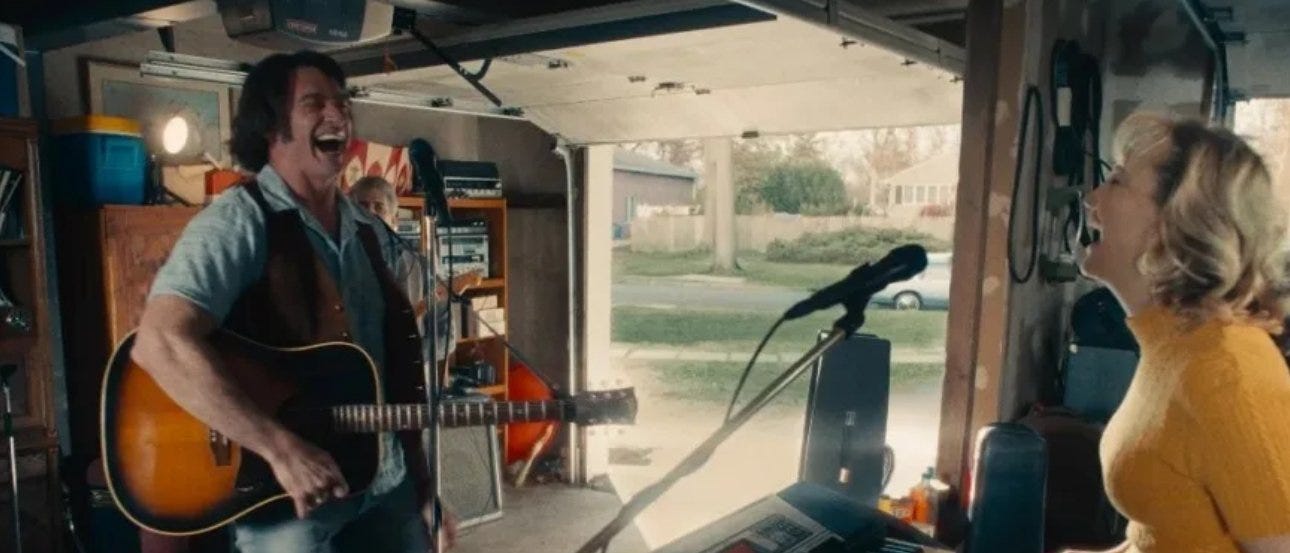
There’s a version of an ending in which your main character achieves their goal but not in the way they anticipated. For example, When Harry Met Sally… is about two people in pursuit of love. They never thought they’d find it with each other. (Though we knew, of course). Or in High Fidelity, Rob wants validation of his taste in music—and therefore his choices in life. What he gets in the end is something more mature and nuanced. He can be a part of the music-making process rather than just a lofty critic and he comes to understand that his choices—as reflected in his relationships—weren’t always all that great.
And then there’s the ending Ryan Coogler gives us in Sinners. He is so smart about the ending of Smoke and Stack’s story, and the realization of their goal is such sophisticated storytelling.
The brothers realize their goal halfway through the film, when the juke joint opens. In fact, there’s that incredible centerpiece of the film in which Sammie sings and plays guitar, summoning the past, present, and future of Black music. This scene is the realization of Smoke and Stack’s explicit goal to create a place where Black people have ownership of their own space.
Then the vampires show up. Because those with power can never let those without have any damned thing.

The next hour of the film is a fight against the supernatural. It’s gory and violent and harrowing and compelling, because we love these characters and we want them to protect the place that they’ve built. By themselves. For themselves.
They lose. Mostly.
Smoke and Sammie do destroy the monsters—both the fangy ones and the KKK who planned to show up later to kill them—but they also lose everything they built. Smoke dies. Sammie does achieve his own goal of becoming a professional blues guitarist.
And here’s the interesting part. A tag shows actual blues legend Buddy Guy as an elderly Sammie, visited by the ageless Stack and his similarly vampiric girlfriend Mary (Hailee Stanfield). It’s a short exchange in which Stack offers Sammie immortality, which Sammie refuses. But what’s evident in both the script and in Michael B. Jordan’s astounding performance is that Stack did get what he wanted. As a vampire, every place he goes is a place of his own. As long as he is what he has become, which he will be forever, no one can take what’s his.

So, as you tackle your stories for this year, think hard about what your character wants. Can you, as David Goyer suggests, sum it up in one sentence? It’s a good place to start, and so much can grow out of that simple beginning.
What were your favorite entertainments of 2025? And what, if anything, did you learn from them?
Glad to be jumping into 26 with a Q&A. Looking forward to it. Thank you as always.
We are so back! Happy-as-possible new year, Ben. I'm looking forward to the Q&A.